

Every summer, whales steal the show in the Saguenay-St. Lawrence Marine Park. But as colder weather arrives, they gradually leave our waters. Where do they spend the winter? Here's a look at the fascinating migration of these marine giants.
Winter Destinations by Species
Species | Winter Destination | Approximate Distance |
Humpback whale | Carribean (West Indies) | ~ 5 500 km |
Fin whale | Bermuda, Bahamas, offshore Atlantic | Varies |
Blue whale | Northwest Atlantic (U.S. East Coast) | Still largely unknown |
St. Lawrence beluga | Remains in the estuary year-round | - |
The St. Lawrence: A Vast Summer Feeding Ground
Before understanding why whales leave in the fall, it's important to understand what brings them here year after year. The main reason so many species gather in the St. Lawrence Estuary and Gulf during the warmer months is food.
Where the waters of the Saguenay Fjord meet those of the St. Lawrence River, currents create ideal conditions for concentrating enormous quantities of krill, fish, and plankton. This rich ecosystem makes the Saguenay-St.Lawrence Marine Park the best whale watching site in the world.
Throughout the summer, whales build up their energy reserves and accumulate thick layers of fat that will fuel their long migrations. These reserves also allow them to fast for several months while spending the winter in tropical waters.
Why Leave in the Fall?
Contrary to popular belief, cold temperatures are not what drive whales away from the Saguenay-St. Lawrence Marine Park. The river's waters remain cold year-round, and it is precisely this cold, oxygen-rich environment that makes it such an exceptional feeding ground.
Instead, migration is largely driven by reproduction. In late autumn, several species begin a long journey toward warmer waters where mating and calving take place. They spend the winter there before returning to the St. Lawrence in the spring to once again take advantage of the abundant food supply.
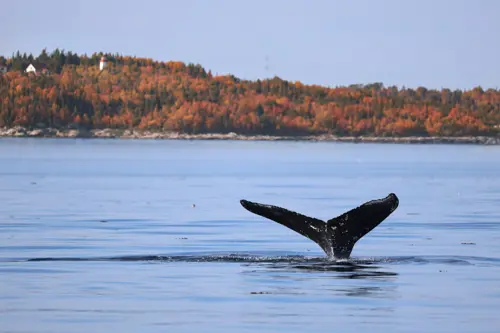
Humpback Whales: Bound for the Caribbean
The humpback whale is probably the migration champion among the species observed in the marine park. In autumn, it leaves the St. Lawrence and travels roughly 5,500 kilometres to the Caribbean.
In these tropical waters, humpbacks mate and give birth to their calves. During this period, they feed very little, since prey is far less abundant than in the St. Lawrence, and rely primarily on the energy reserves they accumulated during the summer. If you spotted Gaspar, Katana, or Fireworks this season, they are likely already on their way to the West Indies.
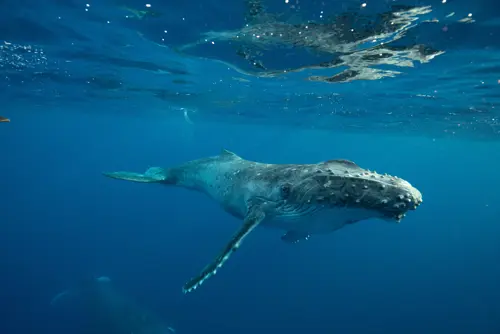
An Extraordinary Migration Record
Even scientists are sometimes surprised by whales' remarkable journeys. A study published in 2024 revealed that a male humpback whale travelled at least 13,046 kilometres between Colombia in the Pacific Ocean and Zanzibar in the Indian Ocean.
Observed multiple times between 2013 and 2022, this whale now holds the record for the longest documented movement between two breeding grounds. Researchers believe the journey, which involved a rare crossing from one ocean basin to another, may have been motivated by the search for a mate.
The Fin Whale: A Traveller Still Shrouded in Mystery
The fin whale still keeps some of its secrets. Thanks to satellite tracking devices, researchers have discovered that some individuals leaving the St. Lawrence spend the winter near Bermuda, the Bahamas, or in various offshore areas of the Atlantic.
Unlike humpback whales, fin whales do not appear to congregate in a single wintering area. Scientists continue to monitor their movements in order to better understand their migration routes.
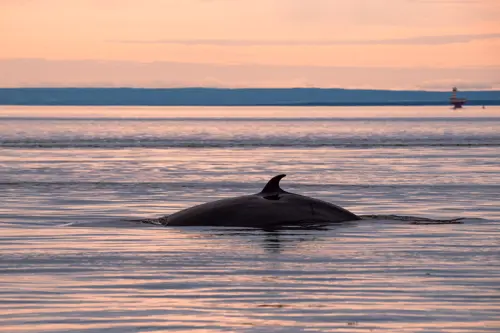
The Blue Whale: A Giant That Keeps Its Secrets
One might assume that the world's largest animal would be easy to track. Yet the migration of the blue whale remains largely mysterious.
Blue whales are present in the St. Lawrence from spring through fall, feeding primarily on krill. They then seem to head toward the warmer waters of the Northwest Atlantic, possibly along the eastern coast of the United States. However, many questions remain unanswered, as some blue whales are still observed in the Gulf of St. Lawrence well into the fall.
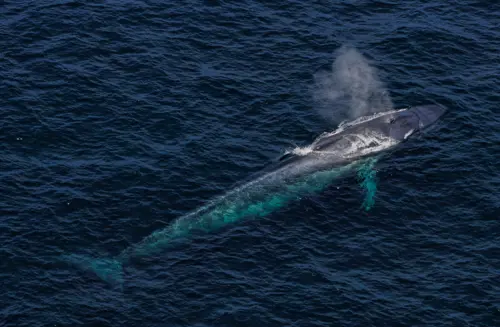
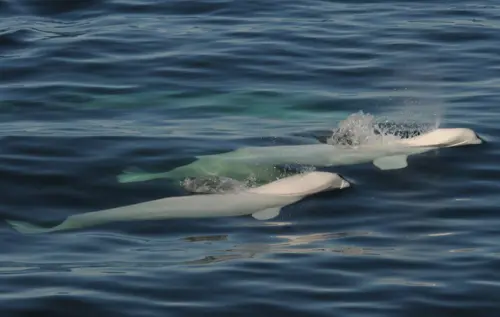
What About Belugas? They Stay Right Here!
The beluga whale is the only cetacean species that lives in the river year-round.
For many years, scientists believed belugas left the region during winter. More recent studies have shown that they remain in the estuary, shifting their movements according to ice conditions and food availability. Even so, their winter behaviour remains relatively poorly understood.
See You in the Spring!
Although most whale species leave the St. Lawrence in the fall, their departure is only temporary. As early as April and May, they begin their return journey to this vast natural feeding ground.
If you didn't have the chance to see them this season, start planning your whale watching tour now and come witness these magnificent giants when they return next spring.
Sources
Baleines en direct (GREMM), « When do the whales of the St. Lawrence migrate ?»
Baleines en direct (GREMM), « Pourquoi les baleines migrent-elles? »
Pêches et Océans Canada, feeding and migration important areas for blue whales
Radio-Canada, « Où vont les bélugas du Saint-Laurent en hiver? »
The Record Humpback – The Whale Who Crossed From the Pacific to the Indian Ocean


