
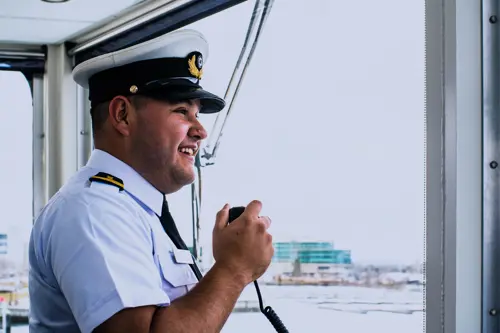
Ever wondered what it takes to steer a ship along the mighty St. Lawrence River? Being a captain isn’t just about holding the wheel—it’s about managing unpredictable conditions and making quick decisions every single day. We sat down with Luiggie Forgiony, who’s been at the helm of the AML Louis Jolliet for years, to get an inside look at this fascinating career.
What’s it like to navigate the St. Lawrence?
In a word: challenging. The St. Lawrence is known as one of the most demanding waterways in the world—and for good reason. Strong winds, powerful tides, shifting currents, and heavy marine traffic all make navigation complex for both commercial vessels and pleasure craft.
Take the northern channel near Île d’Orléans, for example. It’s full of shoals and sandbanks that require precision and constant vigilance. Luckily, the Louis Jolliet is equipped with cutting-edge technology: next-gen radar, ultra-precise electronic charts, and advanced navigation systems. Everything is in place to keep passengers safe, no matter what the river throws at us. For me, it’s a challenge I absolutely love!
What makes every trip unique?
I often compare being a captain to being a doctor: even if the procedure is the same, every patient reacts differently. On the river, it’s the same story. The maneuvers might be familiar, but the conditions never are. Wind, tides, currents, traffic—no two days are alike. Every crossing feels like a new adventure, which keeps my job exciting and far from boring! 😊
How do you prepare for a cruise?
Preparation starts early, long before we reach the dock. Using our tech tools, we review the day’s marine traffic, tide schedules, and weather conditions.
Once on board, we check the ship’s draft to make sure every maneuver can be done safely. As captain, I also make sure the First Mate and crew have everything they need to deliver a flawless experience for our passengers. A smooth sailing day always begins with solid preparation.
What does “responsible navigation” mean to you?
At Croisières AML, responsible navigation is part of who we are. Since 2012, we’ve proudly been members of Green Marine, the leading environmental certification program for the maritime industry in North America.
In practice, this means optimizing speed and routes to take advantage of currents and reduce energy consumption. Thanks to major investments, the Louis Jolliet is equipped with state-of-the-art engines and electrical systems, making it one of the most eco-friendly ships in Canada for its size. For us, protecting the river and the environment isn’t optional—it’s essential.
What happens to the Louis Jolliet in the off-season?
Winter is all about maintenance. We use the downtime for inspections, repairs, and mechanical upkeep to keep the ship in top shape.
It’s also when we update equipment. Safety is our top priority, so we work with specialized partners like ESM to inspect and certify everything from life jackets to rescue rafts. This behind-the-scenes work ensures that when summer arrives, we can offer passengers a safe, reliable, and unforgettable cruise experience.
What inspired you to become a captain?
I’ve always been fascinated by ships—their mechanics, the decision-making, the challenges. On board, nothing is ever the same: weather changes, conditions shift, and every day brings something new. That variety drew me in.
When I started training as an officer, I was inspired by the captains I worked with—their leadership, calm under pressure, and expertise. I wanted to be in their shoes one day. That motivation pushed me to keep studying and climbing the ranks until I became captain. It’s a career that still excites me, even after all these years!


